
How condo boards can cut water damage before renewal
ARMS Technologies · September 26, 2026
Water is the claim that drives condo insurance in Ontario. A Toronto broker, citing the Insurance Bureau of Canada, reports that water-related claims now make up more than half of personal property losses in Ontario condos. For a board, the practical question is how to find leaks before they become claims, and how to show the insurer you did.
Where leaks start
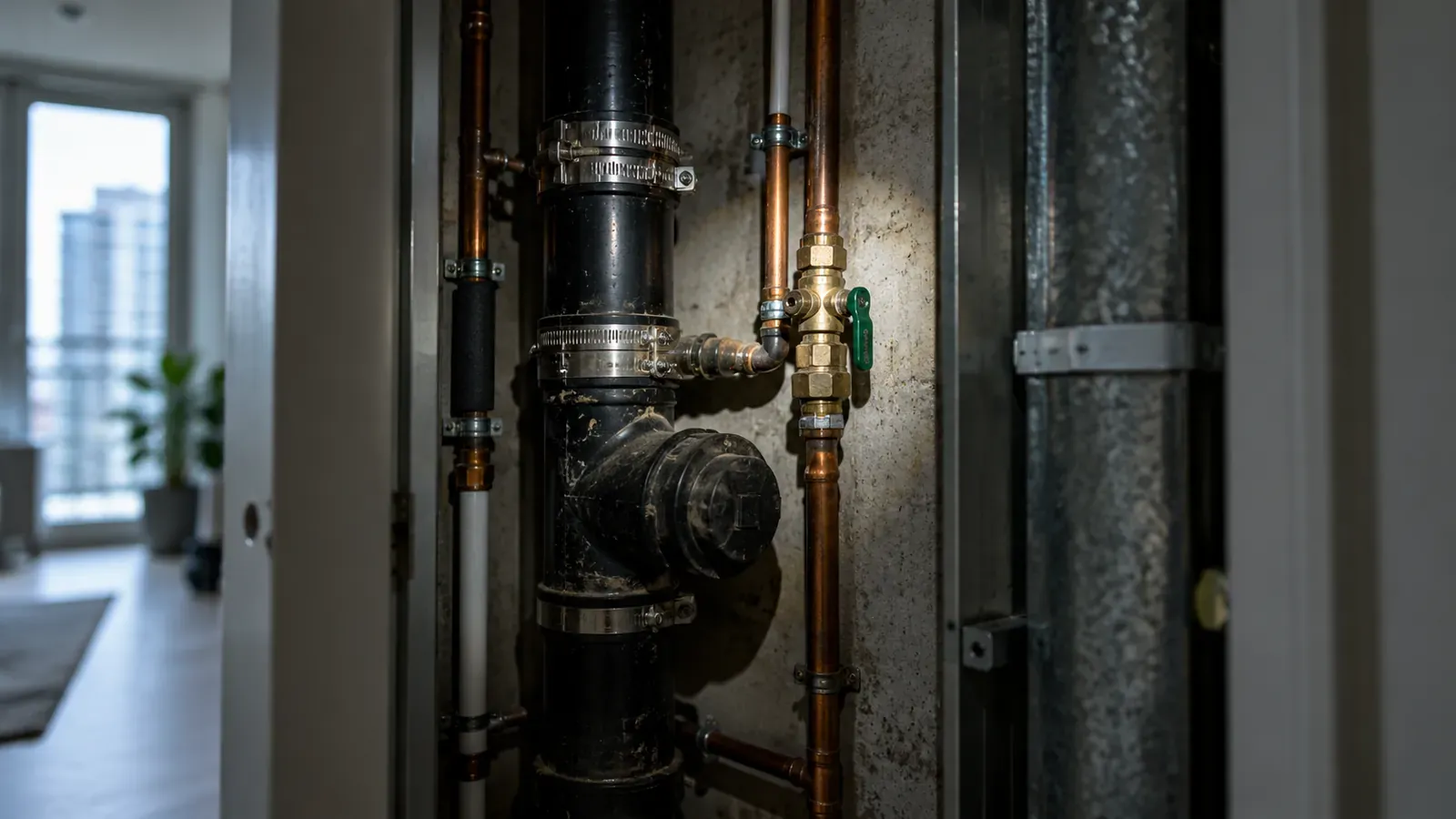
Most building leaks start in a few predictable places: plumbing risers and chases, mechanical rooms, shared laundry rooms, HVAC closets and fan-coil drain pans. They are usually slow at first. By the time a ceiling below is stained, the damage has been growing for days.
Sensors where they pay, patrols everywhere else
Leak sensors with automatic shut-off are excellent where water risk is concentrated, such as ground floors, amenities and mechanical rooms. Some insurers even discount premiums for recognised leak detectors. But sensors on every floor of a tower are expensive, and most buildings don't have them.
The rest of the building depends on people noticing. That works only if the rounds that are supposed to find water actually happen, at the places where water starts.
What one building did
A 626-unit, two-tower Toronto condominium had leak sensors on the ground floor and amenities only. On the residential floors, it made risers, plumbing chases and laundry rooms required checkpoints on staff rounds, and verified every visit with ARMS. Over 12 months, staff caught 52 water events on those floors before they became damage, with no major water-related claims in the period. At renewal, the insurer accepted the patrol record as evidence of structured risk management.
What to show your insurer at renewal
Insurers price what they can see. A claims history shows only what went wrong. A verified inspection record shows what the building does between claims:
- which high-risk areas are checked, and how often;
- every water event found, when, and how it was fixed;
- response times, from first sign of water to closure.
Ask your broker what evidence your insurer will consider, then build the record a full policy year before renewal.
Three steps for this quarter
- List the places water starts in your building, and mark which have sensors.
- Make every unsensored spot a checkpoint on regular rounds.
- Verify the rounds, log every event, and keep the record for renewal.
This article is general information, not insurance advice. Speak to your broker about your building's policy.