
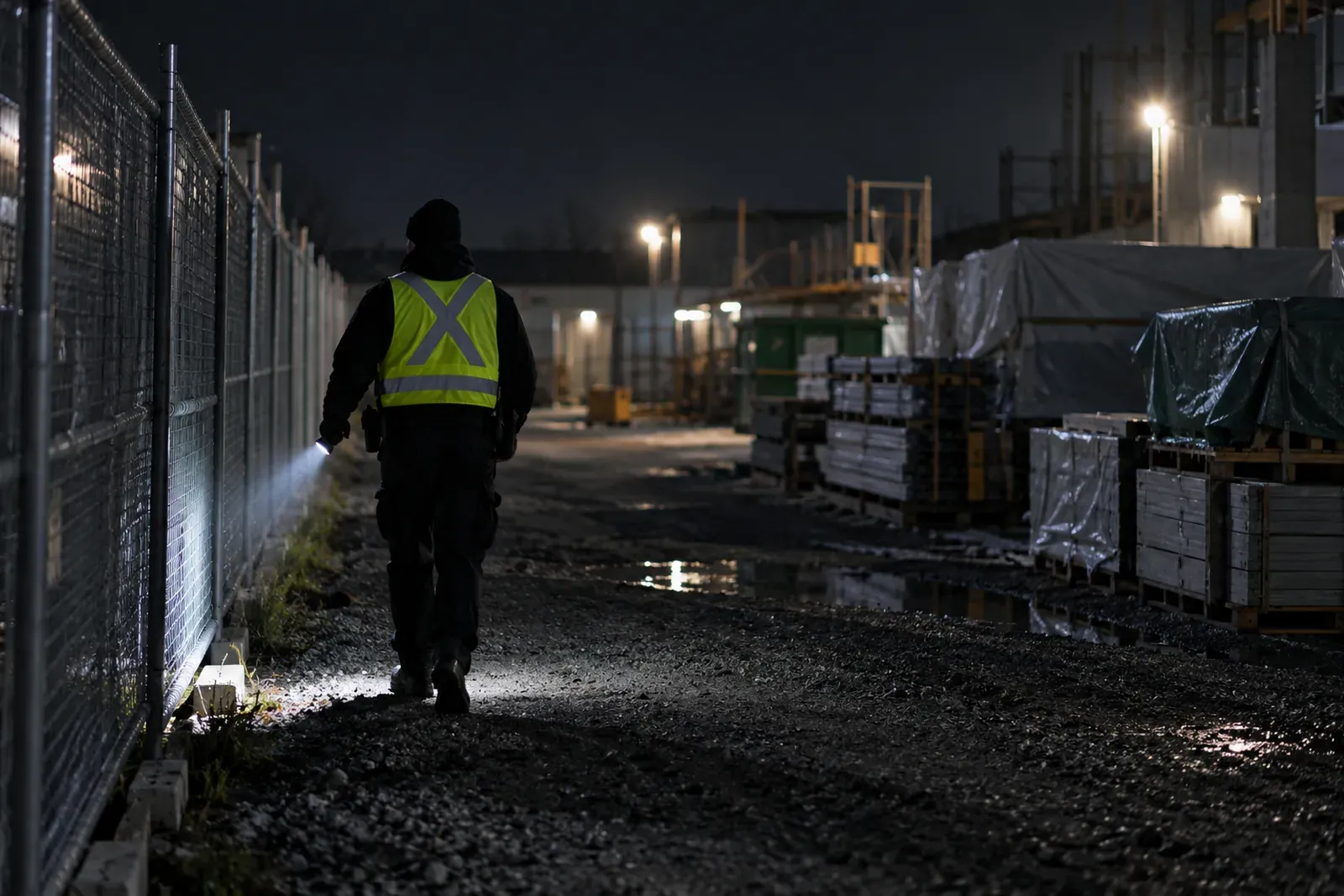
Construction site illuminated after dark
← All case studies

FIELD EVIDENCE / ONTARIO DEVELOPMENT SITE

Six patrol records.
Three physical walks.

Six rounds were filed. ARMS reconstructed the path, direction and timing—and found three continuous walks.

ANONYMISED SITE / ONE SHIFT / CONTRACTED SECURITY PATROLS
01 / THE CONTRACT8

90-minute patrol windows
in the shift

02 / THE PAPERWORK6

patrol reports
submitted

03 / THE FIELD ACTIVITY3

continuous walking
sequences identified

THE ARMS DIFFERENCE

ARMS sees the route.
Not just the report.

Eight patrol windows were contracted and six rounds were filed. A count of completed reports could only say that records existed. ARMS resolved the order of checkpoints, direction of travel and the time between visits to show how the work actually unfolded.

One new round was filed within about two minutes of the previous one ending, while the checkpoint sequence continued through the building. Instead of six separate patrol trips, ARMS identified three continuous walks and about 62 minutes of observed scanning across the 12-hour shift.

Explore ARMS patrol verification ↗

WHAT THE RECORD SHOWED

The route revealed what
the reports could not.

01 / DIRECTION

See where they went.

ARMS reconstructed the order of locations and direction of travel through the building. The checkpoint order showed the downward leg from the top of the building, and a newly filed round continued within about two minutes of the preceding one.
02 / TIMING

See when it happened.

Three rounds were filed 1 hour 43 minutes to 1 hour 58 minutes after the scans. Filing time could make work appear in a later window than the time it was walked.

03 / COVERAGE

See what was missing.

The recorded walks added up to about 62 minutes across a 12-hour shift. Long periods had no verified patrol activity even though multiple reports existed.

The records support the conclusion that six filed rounds did not represent six separate walks. They do not establish why the reports were filed that way, or establish activity beyond what the sensors captured.

WHAT AN OWNER GETS

The shift, in a record
you can inspect.

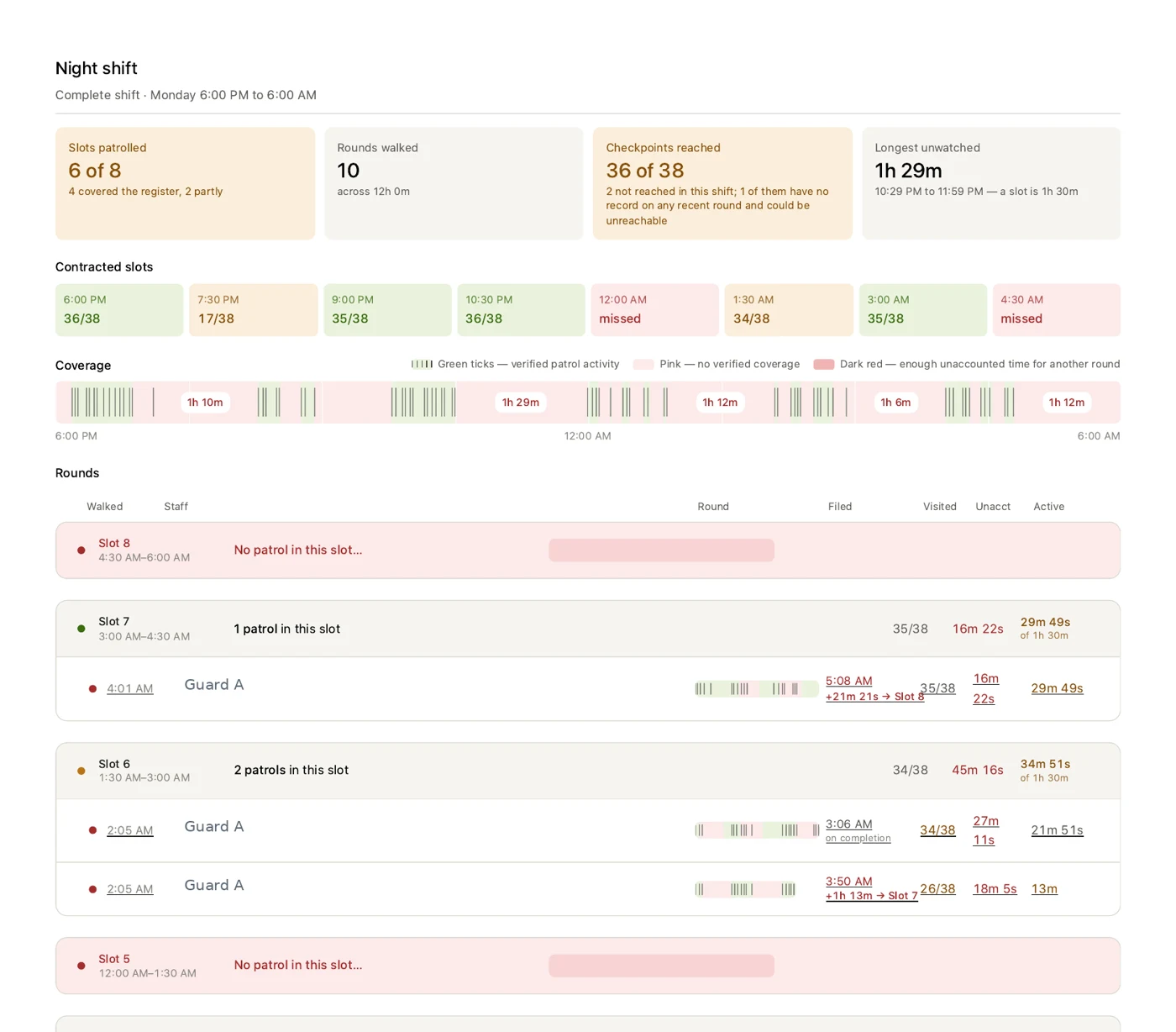
ARMS presents expected patrol windows, recorded locations, timing and exceptions so a manager can ask precise questions about the work.

The sample report illustrates the format; it is not the source record for this anonymised case.
Example ARMS patrol report showing a shift summaryEXAMPLE REPORT / ILLUSTRATIVE FORMAT

THE POINT

ARMS makes the invisible visible.
One route at a time.

ARMS gives owners the detail to distinguish a completed patrol from a filed report: checkpoint order, direction of travel, timing and gaps.

SEE THIS IN YOUR BUILDING

What would your patrol record reveal?

Show us the rounds your site expects. We’ll walk through how ARMS records field work and what your team can review.

Request a walkthrough ↗
NEXT CASE STUDY ↗Patrol completion from fewer than half to more than 85%.Read the residential case →